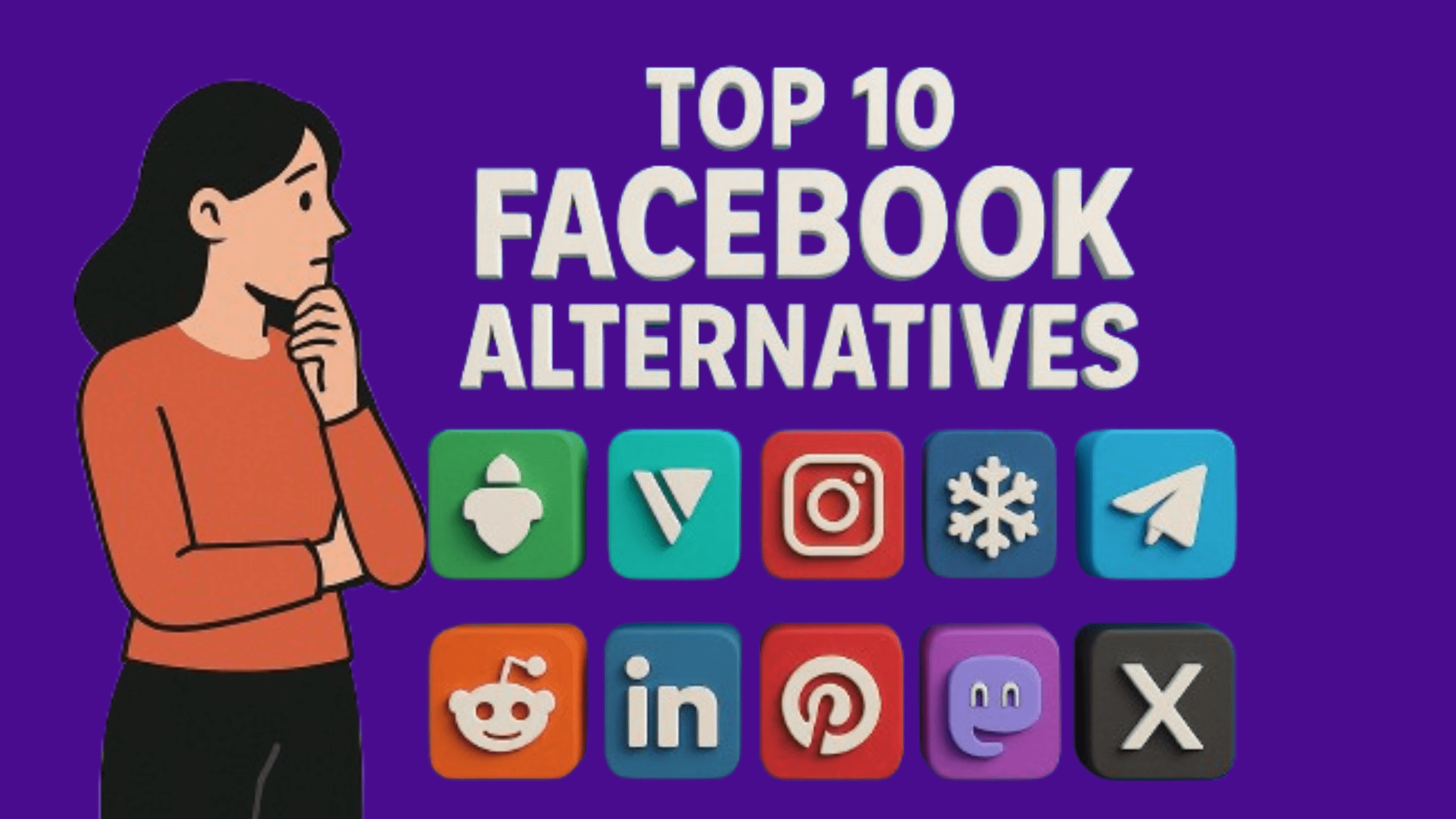
Top 10 Facebook Alternatives You Should Try

Table of Contents
Get Facebook Followers Fast
Boost your online presence instantly! Gain visibility, credibility, and engagement with a safe and effective service.
Buy Followers
Facebook has dominated the social media landscape, attracting billions of active users around the globe for over a decade. But the platform has taken a hit in recent years due to privacy scandals, algorithm frustrations, ad overload and decline in organic reach. As a result, users, both individuals and businesses are looking for other platforms that offer better privacy, unique features or more niche communities.
In the US, for example, Pinterest is now the second most visited Facebook alternative with about 30% of total visits. It even grew 7.5% in user base from 2022 to 2023, outpacing Facebook, Instagram and YouTube. Reddit ranks as the 8th most visited website globally, while Telegram boasts 950 million monthly active users. This article will explore the top 10 Facebook alternatives in 2025, why people are switching and how you can find the best one for your social networking needs.
🤔 Why Consider a Facebook Alternative?
In recent years growing concerns and frustrations have pushed many to look beyond Facebook. While it’s one of the world’s largest and most influential networks, several factors are driving individuals and businesses to better alternatives.
1️⃣ 🔒 Privacy
High profile data scandals and revelations about Facebook’s handling of user data have eroded trust. People are more cautious about how their personal data is collected, stored and shared. As a result many are looking for platforms that offer stronger privacy safeguards, transparent policies and more control over their data.
2️⃣ 📢 Ad Fatigue
The sheer volume of ads on Facebook has made feeds feel cluttered and less enjoyable. For everyday users, this can dilute the experience of connecting with friends and meaningful content. For businesse, this has intensified competition, often requiring big spend to stand out.
3️⃣ ⚙ Algorithm Frustrations
Facebook’s algorithm changes have made it harder for both individuals and brands to get organic reach. Posts may not reach their intended audience, algorithms often favoring paid promotions or specific content formats.
4️⃣ 💬 Changing User Habits
Social media habits are shifting. Many users now prefer niche platforms that prioritize authentic interaction, creativity or specific communities. They’re looking for spaces that feel more personal, interactive and less commercial.
5️⃣ 🌍 Platform Saturation
With billions of users, Facebook is crowded. Newcomers and smaller creators find it hard to get visibility in the noise. Businesses and individuals alike struggle to stand out without big resources or an established audience.
🏆 10 Best Facebook Alternatives in 2025
Here are the platforms gaining traction, from privacy-focused communities to creative and professional hubs.
1️⃣ Minds – Privacy First Social Networking

Minds is a privacy-first, open-source social media platform launched in 2015 as an alternative to data-driven giants like Facebook. It has familiar features, profiles, posts, groups and sharing without intrusive tracking or algorithmic feeds. Posts appear chronologically and users can engage freely without manipulation from hidden ranking systems. Its transparency comes from open-source code; anyone can inspect or contribute to the platform’s backend.
Minds incentivizes user engagement with its native cryptocurrency, Minds Tokens, which can be spent to promote content or contribute to creators. Messaging is end-to-end encrypted for private conversations. While the interface is a little less polished than mainstream apps, its focus on user autonomy makes it a good choice for privacy-conscious users who want control over their data. Minds has free and premium tiers, with added monetization tools for paid subscribers.
Pros:
- ✅ Privacy-focused, no tracking or algorithmic feeds
- ✅ End-to-end encrypted messaging
- ✅ Earn cryptocurrency (Minds token) for content
- ✅ Open-source for transparency and trust
Cons:
- ❌ Token system can be confusing for beginners
- ❌ Small mainstream user base
- ❌ Less polished interface than Facebook
Best for: Privacy advocates, free speech supporters and creators who want monetization control.
2️⃣ Vero – Ad Free, Authentic Connections

Vero was launched in 2015 as an ad-free, algorithm-free platform to bring back authenticity to social media. Its sleek, mobile-only interface is popular among photographers, musicians and creatives who value chronological feeds and curated connections. Vero’s selective sharing lets you choose who sees your posts, grouping contacts into friends, close friends or acquaintances.
The app supports various media formats, photos, videos, links and even book or music recommendations making it versatile for creative storytelling. Vero offered free lifetime access to early users with a subscription model planned for the future to keep it ad-free. While the smaller user base limits reach, it also creates a more intentional and less noisy environment. For those tired of algorithm-driven feeds, Vero is a cleaner, more personal alternative.
Pros:
- ✅ Chronological, ad-free timeline
- ✅ Designed for creative professionals
- ✅ Private sharing via contact tiers
Cons:
- ❌ No desktop version
- ❌ Smaller audience than mainstream apps
- ❌ Subscription fees may deter new users
Best for: Creatives, photographers and those who dislike ads.
3️⃣ Instagram – Visual Storytelling at Scale

Instagram, owned by Meta, is a visual-first social media platform for sharing photos, videos and Stories. While it shares some DNA with Facebook, Instagram is focused on dynamic, aesthetic-driven content for individuals and brands. Tools like Reels encourage short, engaging videos, while Stories are 24-hour posts for casual updates or behind-the-scenes peeks.
It has built-in Shopping features that turn posts into storefronts, allowing creators and businesses to sell directly through the app. With over a billion active users, it’s a prime hub for growth, though its algorithm-heavy feed can limit organic reach. Spam in comments and privacy concerns are ongoing issues. Still, its massive audience, rich features and creative potential make Instagram a natural choice for those seeking high visibility.
Pros:
- ✅ Creative tools like Reels, Stories, and Shopping
- ✅ Large user base, often overlapping with Facebook
- ✅ Less controversy in feeds
- ✅ Highly engaging interactive features
Cons:
- ❌ Meta ownership raises privacy concerns
- ❌ Frequent spam in comments and DMs
- ❌ Algorithm limits organic reach
Best for: Visual storytelling, influencer marketing and brand building.
4️⃣ Diaspora – Decentralized Data Control

Diaspora is a decentralized, open-source social network that gives users full control over their data. Instead of one central server, it runs on independently managed “pods” that users can choose based on location or privacy preferences. It has common social tools, status updates, photos, hashtags and private messaging—without ads or corporate oversight.
Diaspora uses “Aspects” to organize contacts, so you can share posts with highly targeted groups. The platform allows anonymous sign-ups and has two-factor authentication for extra security. While the interface is less modern than newer apps and the pod system can be confusing for beginners, the privacy-first approach appeals to those who want full control online. Best of all, it’s free with no upsells or tracking.
Pros:
- ✅ Full data control with self-hosted pods
- ✅ No ads or corporate data collection
- ✅ Custom contact groups for targeted sharing
- ✅ Privacy-first with familiar social tools
- ✅ Open-source for transparency and customization
Cons:
- ❌ Outdated interface
- ❌ Pods may confuse newcomers
- ❌ Direct messages can’t be deleted
Best for: Tech-savvy privacy enthusiasts and open-source supporters.
5️⃣ Telegram – Privacy First Messaging & Communities

Telegram is a cloud-based messaging platform that has evolved into a multifunctional communication hub, now serving over 500 million users. Known for its speed, security and cross-device syncing, Telegram supports text, voice and video messaging as well as massive groups (up to 200,000 members) and public broadcast channels. Private chats can be end-to-end encrypted and set to self-destruct for extra security.
With features like custom stickers, pinned messages and seamless media sharing, it rivals Facebook Messenger while being ad-free and tracking-free. Telegram’s open-source client code is transparent, though its proprietary server infrastructure means it’s not fully decentralized. The lack of a central news feed and smaller adoption in some circles can be drawbacks, but for privacy-focused communication and large-scale community building, Telegram is a winner.
Pros:
- ✅ Privacy-first with encryption and disappearing chats
- ✅ Unlimited group and broadcast support
- ✅ Lightweight, cloud-based, multi-device friendly
- ✅ Open-source and secure
Cons:
- ❌ Requires convincing others to join
- ❌ No central feed, messages checked separately
- ❌ Missing broad networking tools of social platforms
Best for: Private messaging, community building and large group communication.
6️⃣ Reddit – Interest-Based Communities

Reddit is a hub for conversation, curiosity and community where users can go beyond scrolling to engage deeply with topics that matter to them. Instead of an algorithmic feed, Reddit organizes content into subreddits, dedicated forums centered on specific interests, from home renovation to conspiracy theories. This structure fosters focused, user-driven discussions where quality content rises via the upvote/downvote system.
You can join anonymously, build trust and influence through karma, while volunteer moderators keep things on topic. Live discussions, shared experiences and no algorithmic manipulation give Reddit a very organic feel. It’s wide open and varied so perfect for those who want authenticity over polished corporate feeds.
Pros:
- ✅ Topic-specific communities
- ✅ User-driven content discovery
- ✅ Anonymity encourages honesty
- ✅ Moderation keeps quality high
- ✅ Karma system rewards valuable contributions
Cons:
- ❌ Dense interface for beginners
- ❌ Public forums over private chats
- ❌ Some subreddits have bots or low-quality posts
- ❌ Comment threads can be hard to follow
Best for: Topic communities and deep discussions.
7️⃣ LinkedIn – Professional Networking

LinkedIn has evolved from a digital resume to a professional networking platform. It connects people with career opportunities, industry insights and professional communities. You can showcase your expertise, share achievements, follow companies and thought leadership. Creator Mode, native video and Stories expand your content options, while LinkedIn Learning offers courses for skill development.
Job seekers get targeted alerts, application tracking and recruiter outreach tools. Businesses use LinkedIn for hiring, brand visibility and networking. The free version has strong networking tools but Premium ($14.99/month) adds InMail, salary insights and analytics to deepen connections and job prospects. LinkedIn’s moderation standards keep it professional but the format isn’t for casual socialising.
Pros:
- ✅ Focused on professional growth and industry discussions
- ✅ Advanced job search tools with filters, saved searches, and tracking
- ✅ Strong moderation to reduce harassment and spam
- ✅ Career-focused content on leadership, business, and innovation
- ✅ Supports rich formats like videos and Stories
Cons:
- ❌ Not for personal or family interactions
- ❌ Networking tools can be complex for beginners
- ❌ InMail and requests can feel impersonal or too much
Best for: Professionals, job seekers and B2B networking.
8️⃣ Pinterest – Visual Discovery

Pinterest is a visual discovery engine that inspires users with ideas across categories like home décor, fashion, recipes and DIY projects. Its 463 million monthly active users (2023) come to the platform not to debate but to be inspired and plan. Pins can be saved to personal or shared boards, creating curated collections of ideas. Businesses have integrated shopping tools, product tagging and visual search.
Pinterest’s collaboration with LiveRamp enhances user privacy while enabling advertisers to run more personalized and targeted campaigns. Known for its clean, drama-free environment, Pinterest’s high user satisfaction score (73/100) reflects its trustworthiness. While it’s more about discovery than interaction, its focus makes it perfect for brands and individuals who want a clutter-free creative space.
Pros:
- ✅ High user satisfaction with steady growth
- ✅ Clean, idea-focused interface with no social drama
- ✅ Easy content discovery and organisation via boards
- ✅ Strong e-commerce integration for visual products
- ✅ Privacy-friendly advertising partnerships
Cons:
- ❌ More about discovery than interaction
- ❌ Limited social features like messaging or live chat
- ❌ Brands need a strong visual strategy to succeed
Best for: Inspiration, creative projects and e-commerce discovery.
9️⃣ Mastodon – Decentralised Social Networking

Mastodon is a decentralised, ad-free social platform made up of independent servers (instances). Each server has its own community guidelines and culture so users can choose or create their own space. Despite being distributed, Mastodon supports cross-server follows so users still feel connected network-wide.
Posts appear chronologically without algorithmic interference and the platform supports diverse formats like video, polls and custom emojis. Content warnings, accessibility features and community-driven moderation create safe, inclusive spaces. Being open-source, Mastodon invites collaborative development and innovation. While free, some servers rely on voluntary donations. The biggest hurdles are the smaller user base and the initial complexity of choosing a server.
Pros:
- ✅ Decentralised design with community-led moderation
- ✅ Chronological feed for balanced viewing
- ✅ Supports diverse post types, from media to polls
- ✅ Locally managed servers for safe, tailored communities
- ✅ Open-source and transparent
Cons:
- ❌ Decentralised signup can be confusing for newcomers
- ❌ Smaller user base limits content variety
- ❌ Requires actively following hashtags/accounts for a rich feed.
Best for: Decentralised networking and community moderation.
🔟 X (Formerly Twitter) – Real Time Conversations

X is one of the fastest and most direct ways to join global conversations, follow breaking news and engage with public figures. With 500 million monthly active users, it’s a go-to platform for journalists, influencers and everyday users to share updates instantly. Hashtags and the “For You” feed surface trending content while multimedia support (text, images, videos, polls) keeps posts engaging.
Creator Subscriptions allow monetization, and X Premium ($8/8/month) unlocks longer tweets, edit options, reply priority and verification. X is great for real-time interaction but can also be noisy with trends sometimes overwhelmed by unrelated content. Its public, fast-paced nature makes it better for open discussion than private networking.
Pros:
- ✅ Excellent for breaking news and live updates
- ✅ Public figures and media outlets engage directly with users
- ✅ Fast, clean, and easy-to-use interface
- ✅ Strong multimedia support for engaging posts
- ✅ Large, active community with discussions on nearly any topic
Cons:
- ❌ Trending section can get cluttered with irrelevant posts
- ❌ Not ideal for private or family-focused networking
- ❌ May feel too niche or tech-heavy for some newcomers
Best for: Real-time news, trending topics and public conversations.
🧭 How to Choose the Right Facebook Replacement
Choosing the right Facebook replacement is more than just downloading the latest app. The search begins with understanding your own needs and methodically evaluating options.
1️⃣ 🎯 Define your goals and priorities
The journey to finding a suitable Facebook alternative starts with self-reflection. Ask yourself what you truly want in a social platform:
- 👨👩👧 Are you connecting with family and friends?
- 🎥 Do you create content that requires specific tools?
- 📈 Is your focus on business networking or brand building?
Knowing your purpose narrows down the options to platforms that align with your needs. For example, privacy-conscious individuals might prioritise Diaspora or MeWe, while professional networkers should consider LinkedIn.
2️⃣ ⚖ Compare features and user base
Once you have your goals defined, evaluate each platform’s features:
- 🖥 Interface and usability: How does navigation feel?
- 🔒 Privacy policies: What data is collected and what are the user controls?
- 👥 User demographics: Are they the right audience for you?
- 💰 Monetization approach: Do you prefer subscription-based or ad-supported?
Remember, different platforms excel in different areas—LinkedIn has the highest visitor-to-lead conversion (2.74%) among social networks, making it perfect for business purposes.
3️⃣ 🧪 Try before you commit
Finally, hands-on experience beats any feature list. Create accounts on promising platforms and use them actively before switching permanently. Some people find it easier to transition when they:
- ⏸ Temporarily deactivate their Facebook account as a trial run
- 📂 Download their Facebook data before deleting it permanently
- 🔄 Join alternative platforms while keeping Facebook active
This methodical approach will help you find a Facebook replacement that actually improves your online life.
✅ Conclusion
In 2025, Facebook won’t be the only place to be online. Whether you care about privacy, creativity, professional development or niche communities, there’s a platform for you. From decentralized networks like Mastodon and Diaspora to visual spaces like Pinterest and Instagram, each alternative has its strengths that can change your online life. It’s about identifying what matters most: security, audience reach or ad-free interaction, and testing until you find the right one. By using these alternatives, you can take back control of your online presence and have more meaningful and enjoyable connections.